

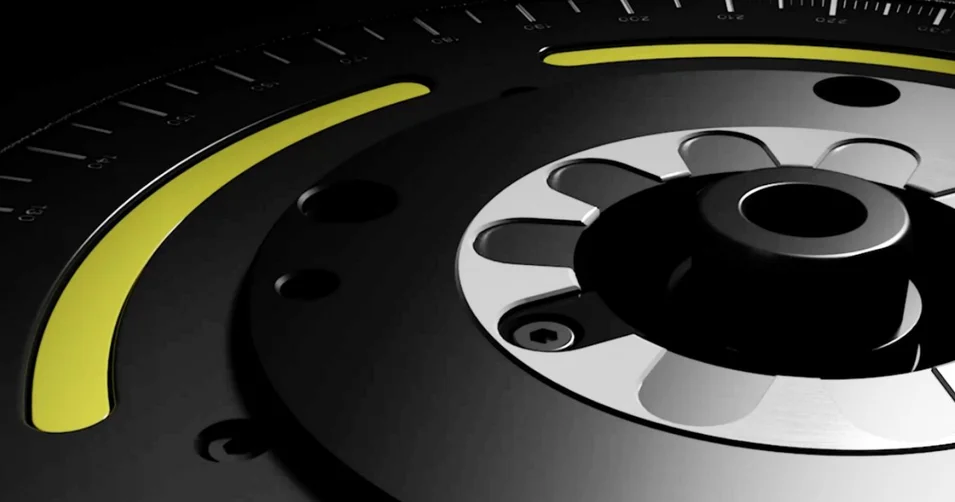
Tool Balancing Technology: Your advantages
Balancing is underestimated. Yet balancing leads to greater efficiency because it reduces costly tool wear and relieves the load on machine spindles.
Learn more
Frequently Asked Questions
The »toolBalancer« is so exceptionally accurate because of the center offset during measurement. This advantage applies to every tool—but especially to smaller HSC tools.
Yes, you can. What makes the »toolBalancer's« spindle especially versatile is its ability to accommodate both ZOLLER balance adapters and adapters from other manufacturers. You can use them in the spindle.
Ease of service is the main difference compared to other balancing machines on the market. Starting with the »toolBalancer«’s »twinPanel« safety cover. If a part comes loose during balancing or the panel deteriorates due to contact with oil, you don’t have to replace the entire cover right away. The cover is designed with two panels, so you can replace just the inner panel. That’s why we call it the “sacrificial panel.” Furthermore, you have simple access to the spindle, and all electronic components are carefully and securely installed in the control cabinet to ensure trouble-free operation. The positioning of the control cabinet, the drives, and the sensors ensures optimal accessibility for maintenance and service work.
The »toolBalancer« is a newly developed product that features more advanced technology and a superior, more ergonomic design. This results in high precision, simple operation, and certified safety.
In this video, we'll show you exactly how the »toolBalancer«'s unbalance correction process works.
At ZOLLER, you’ll find a range of options for learning more about a specific product. For example, a one-on-one consultation with an expert in our virtual showroom. We’d also be happy to exchange information via Microsoft Teams or by phone. Or you can stop by our Smart Factory.
A balanced tool assembly ensures a longer tool lifetime, low vibration, higher spindle speed, better surface finish on parts, and, above all, a longer spindle lifetime.
Unbalance in a tool assembly generates excessive centrifugal forces that can damage the spindle bearings. Such damage reduces the spindle’s lifetime and can lead to costly unplanned downtime.
Cutting tools are sometimes asymmetrical, for example, due to flattening of the shank (Weldon surface). Profile cutting tools may have an asymmetrical weight distribution. When such cutting tools are fitted in a balanced tool holder, this results in an unbalance in the tool assembly. Collet chucks, clamping nuts, stop screws, data chips, etc., also contribute to the unbalance of the tool assembly. Once these other components are added to the tool holder assembly, the tool holder may need to be rebalanced to meet ISO balancing specifications.
ZOLLER offers specialized adapters for clamping drill-milling cutters and tools with different shank sizes.
The following rule of thumb can serve as a guide for determining whether the tool holder should be balanced "statically" or "dynamically":
Static: Single-plane balancing applies to tool holders with an operating speed of less than 20,000 rpm and where the total length of the holder is less than twice the maximum diameter of the tool holder.
Dynamic: Two-plane balancing applies to tool holders with an operating speed of more than 20,000 rpm, or when the total length of the holder is more than twice the maximum diameter of the tool holder.
"G" indicates the balance grade. CNC machines, machine tool drives, and the tool industry use G2.5 for finishing tools, G6.3 for roughing tools, and G1 for grinding wheels.
These are the quality grades according to DIN ISO 1940-1.
In balancing technology, there are three methods for correcting unbalance:
Adding material using the screw method;
removing material by drilling or milling;
and shifting material using unbalance rings.
If the spindle is running at only 2,000 rpm because of vibrations and cutting noise, this is due to the use of an unbalanced tool assembly. When the tools are balanced, higher speeds and feeds can be used, thereby increasing profitability.
This is the unit used to measure unbalance. Unbalance is caused by a rotating mass located off-center from the axis of rotation. Unbalance is expressed as the product of this mass and the distance from the axis of rotation, e.g., in gram-millimeters (gmm) or kilogram-meters (kgm).
Balancing is underestimated. Yet balancing leads to greater efficiency because it reduces costly tool wear and relieves the load on machine spindles.

The individual exchange about your goals and our ideas for achieving them. Online advice from ZOLLER directly from the Smart Factory. Arrange your appointment now.